About Case Studies Approach Writing Contact
← All case studies
Case study · 02

Fuel Buddy

Helping vehicle owners compare real-time fuel prices, locate nearby stations, and access emergency roadside assistance.

Mobile AppConcept ProjectSolo Designer

70%

Drivers skip price check

40%

Breakdowns preventable

3+

Target user segments

5

Core features designed
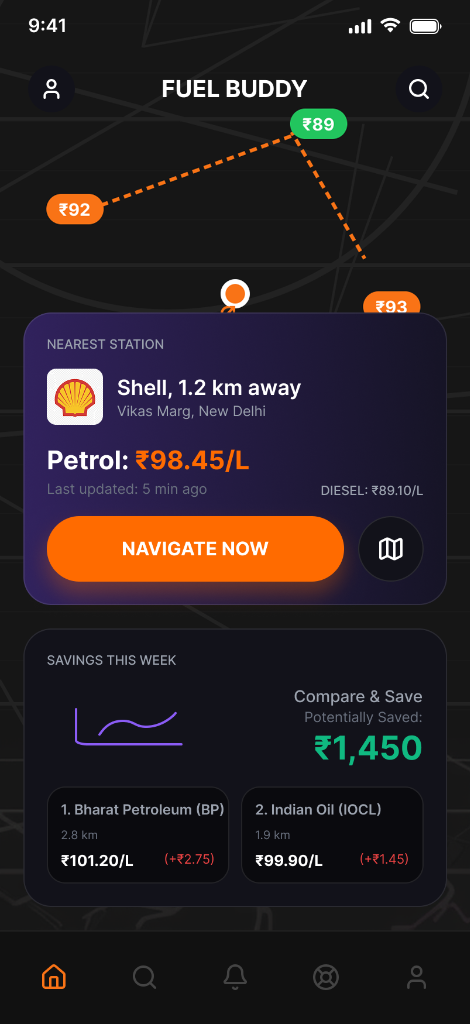
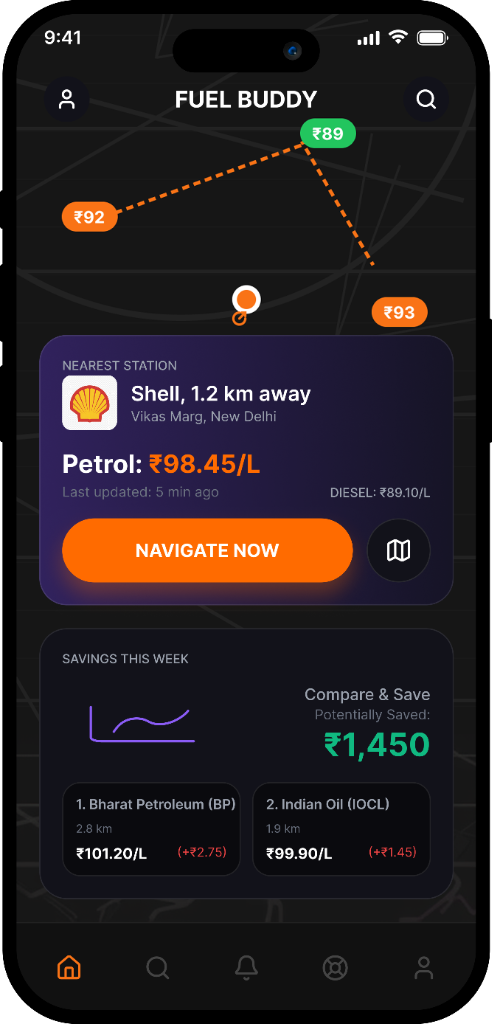
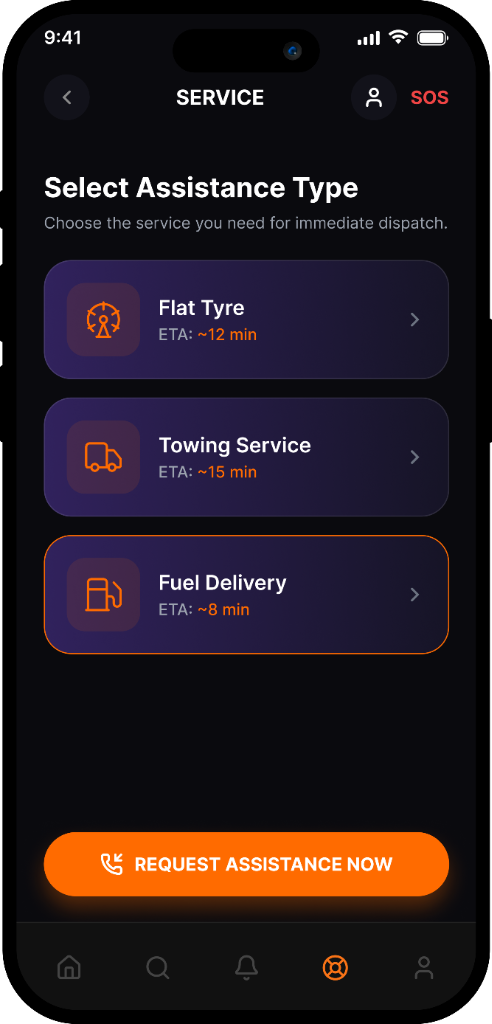
Fuel Buddy Home ScreenFuel Buddy Roadside Emergency Screen
01

Project Overview

Fuel Buddy is a mobile app concept designed to solve three interconnected problems that vehicle owners face daily - unpredictable fuel prices, difficulty locating nearby stations, and lack of quick emergency roadside help. This was a solo concept project where I owned the full design process from research to final UI.

Role

Solo UI/UX Designer (End to End)

Timeline

4 Weeks - Concept Project

Platform

Mobile App (iOS & Android)

Tools

Figma · Notion · Pen & Paper

02

Problem Statement

Fuel prices fluctuate daily, yet most vehicle owners have no easy way to compare prices before refueling. Beyond cost, finding a nearby station in an unfamiliar area and getting quick help during a breakdown are equally frustrating pain points with no unified solution.

No Price Transparency

70% of drivers refuel without checking prices, leading to unnecessary overspend on every fill.

Station Discovery Gap

Google Maps shows stations but not live prices. Users have to cross-reference multiple apps.

Emergency Assistance Void

40% of breakdowns are preventable - but when they happen, drivers struggle to find quick help.

Fleet Inefficiency

Fleet operators have no visibility into driver fueling behaviour or station price optimisation.

03

User Research & Insights

I conducted informal interviews with 5 vehicle owners - daily commuters, a fleet manager, and a delivery driver - to understand real frustrations around fueling.

"I never check prices - I just stop at the nearest station."

- Daily commuter, Chennai

"When my tyre burst on the highway, it took me 45 minutes to find help."

- IT professional, 32

"I manage 12 vehicles and have zero visibility into where my drivers refuel."

- Fleet manager
04

User Personas

R

Ravi, 34

Fleet Manager · Chennai

Manages 12 delivery vehicles. Monthly fuel spend: ₹80,000+

Goal

Reduce fuel costs & track driver refueling behaviour

Pain

No real-time price data, no driver accountability tools

P

Priya, 28

Daily Commuter · IT Professional

Drives 40km/day. Refuels 2-3x per week.

Goal

Save money on fuel & get help fast during emergencies

Pain

Wastes time finding stations, panic during breakdowns

05

Competitive Analysis

No single existing app combines all three core needs. This gap validated the opportunity for Fuel Buddy.

Feature Google Maps PetrolPrices Fuel Buddy
Real-time price comparison
Nearby station finder
Emergency roadside assistance
On-demand fuel delivery
Fleet management dashboard
Trip cost calculator
Crowdsourced price reporting
06

Design Process

I followed a structured design thinking approach - moving from broad ideation to focused execution through four phases.

01

Discover

Informal user interviews + competitive research to validate the problem space.

02

Define

Who/What/How/When framework + user personas to anchor design decisions.

03

Ideate

Divergent brainstorming across 4 idea categories, then converged to 5 core features.

04

Design

Hand-drawn wireframes → Figma high-fidelity screens with component system.

07

Brainstorming & Ideation

I used divergent thinking to explore ideas across four categories before converging on the most valuable features.

Price & Savings

  • Crowdsourced fuel prices from users
  • AI-based price prediction
  • Cashback & rewards programme
  • Fuel subscription discount plans

Delivery & Convenience

  • On-demand fuel delivery to location
  • Emergency fuel top-up mid-journey
  • Station pre-booking at locked price

Vehicle & Roadside

  • 24/7 emergency assistance
  • AI vehicle health monitor
  • Subscription-based roadside plans

Navigation & Community

  • Best fuel stops along route
  • Driver community & station reviews
  • AI traffic-based fuel planning
08

Core Features Designed

From the brainstorming pool, I converged on 5 features that deliver maximum value with the highest user need and lowest implementation risk.

01

Real-Time Fuel Price Comparison

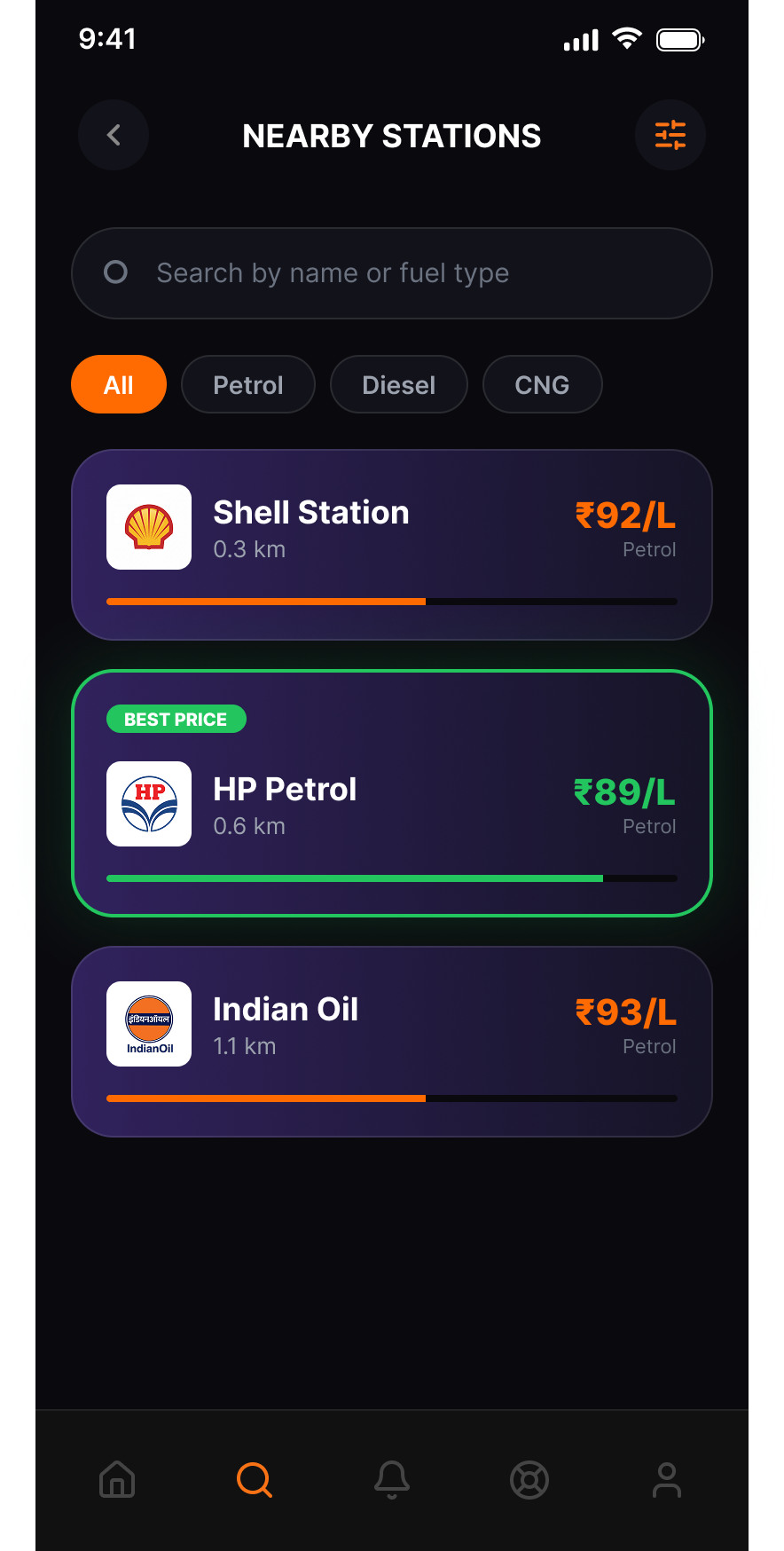
Users search and compare live prices across nearby stations. Saves money on every refuel.

02

Nearby Station Finder

Map-first interface showing closest stations with price overlays and distance. Built for unfamiliar areas.

03

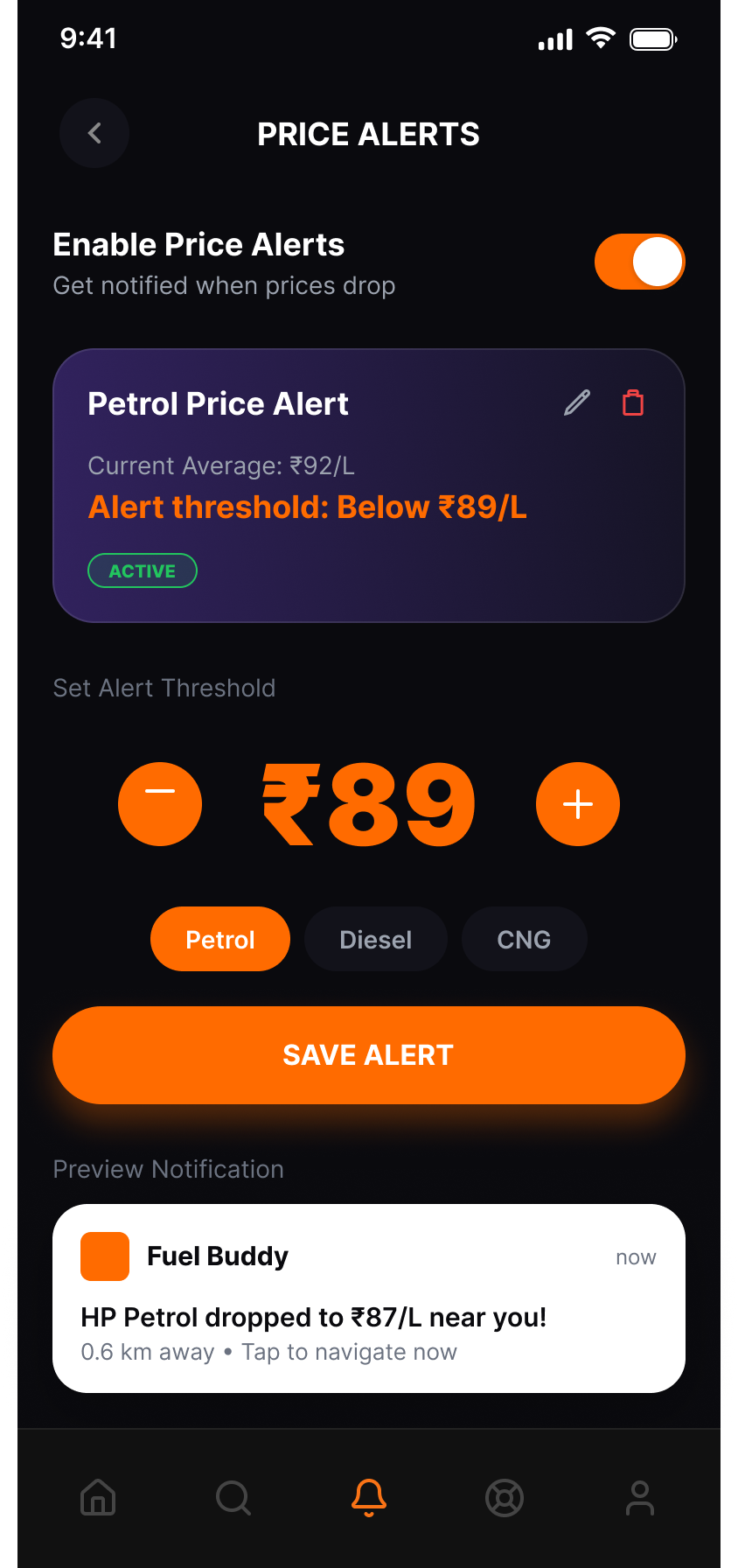
Instant Price Alerts

Push notifications when prices drop or spike in the user's area. Helps users time their refuel.

04

On-Demand Roadside Assistance

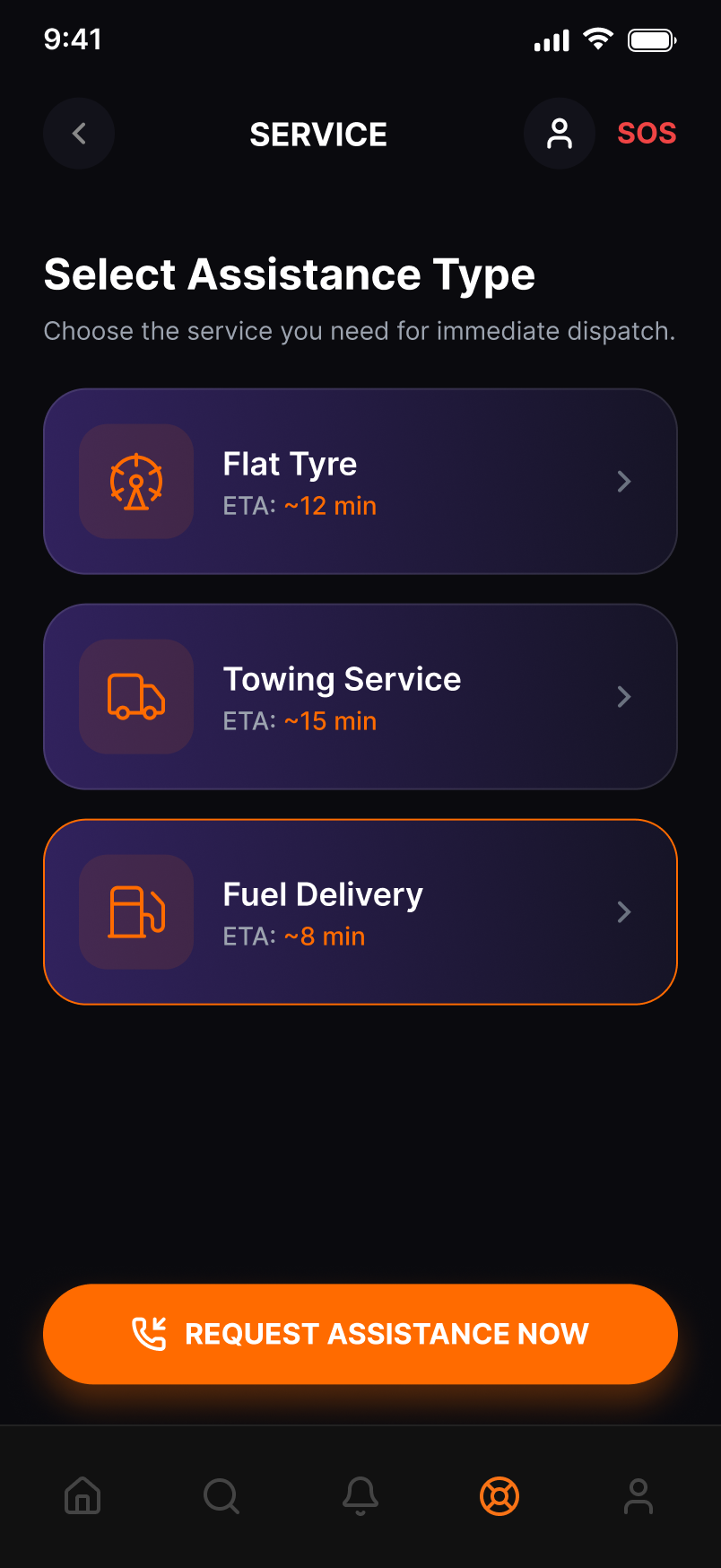
One-tap access to puncture repair, towing, and oil refills with real-time ETA tracking.

05

Trip Cost Calculator

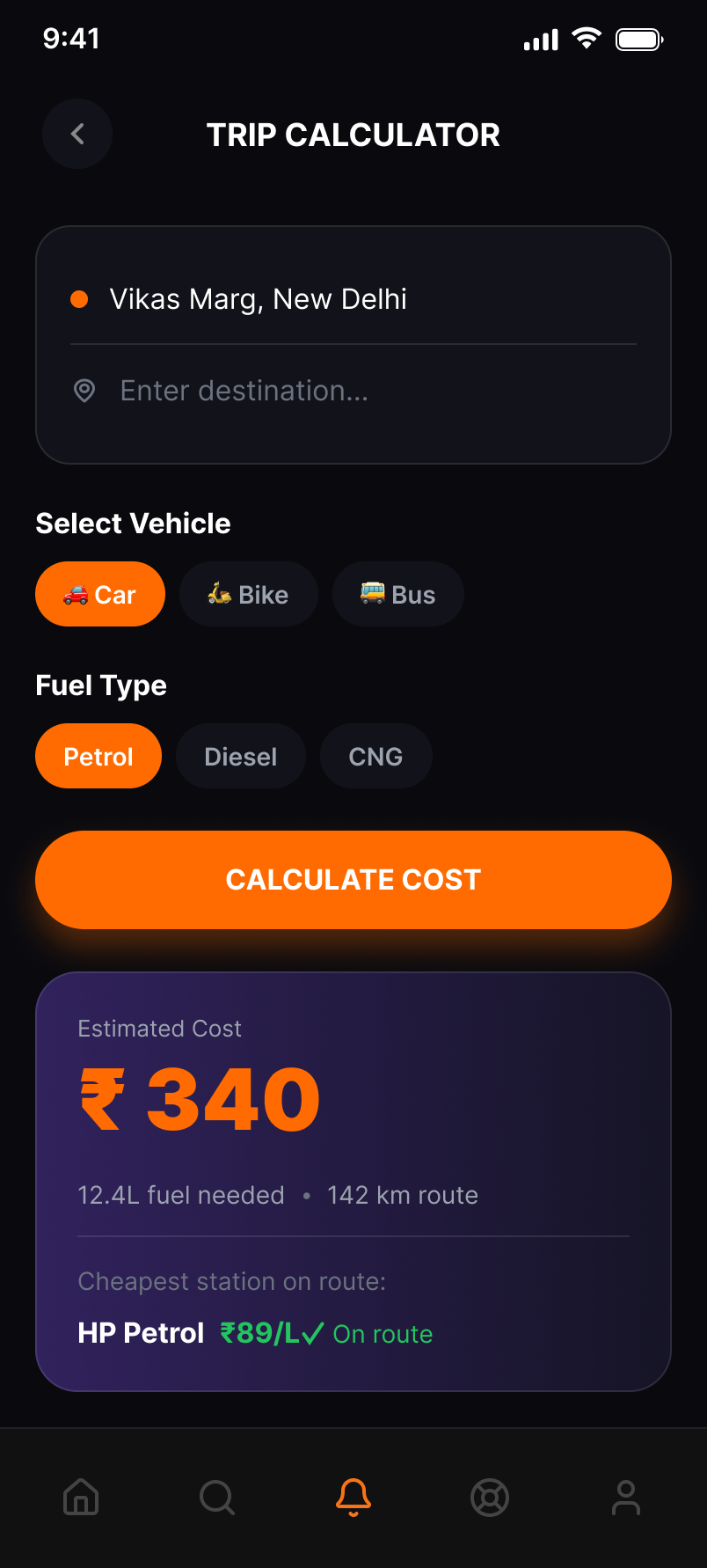
Users enter destination and vehicle type - app estimates total fuel cost based on live prices en route.

09

Interface & Mockups

Browse the designed screens of Fuel Buddy. Click on any screen slot to upload and preview your own high-fidelity product interface screens directly in the layout.

HOME / MAP VIEW
View Screen

HOME / MAP VIEW

STATION LIST & PRICES
View Screen

STATION LIST & PRICES

STATION DETAIL
View Screen

STATION DETAIL

ROADSIDE ASSISTANCE
View Screen

ROADSIDE ASSISTANCE

TRIP COST CALCULATOR
View Screen

TRIP COST CALCULATOR

PRICE ALERT SETTINGS
View Screen

PRICE ALERT SETTINGS

10

Key Design Decisions

These three decisions were intentional and grounded in user behaviour.

→

Map-First Home Screen

Chose a map view as the default instead of a list because users in unfamiliar areas need spatial context first. A list requires mental mapping - the map is immediate.

→

Price as the Hero Element

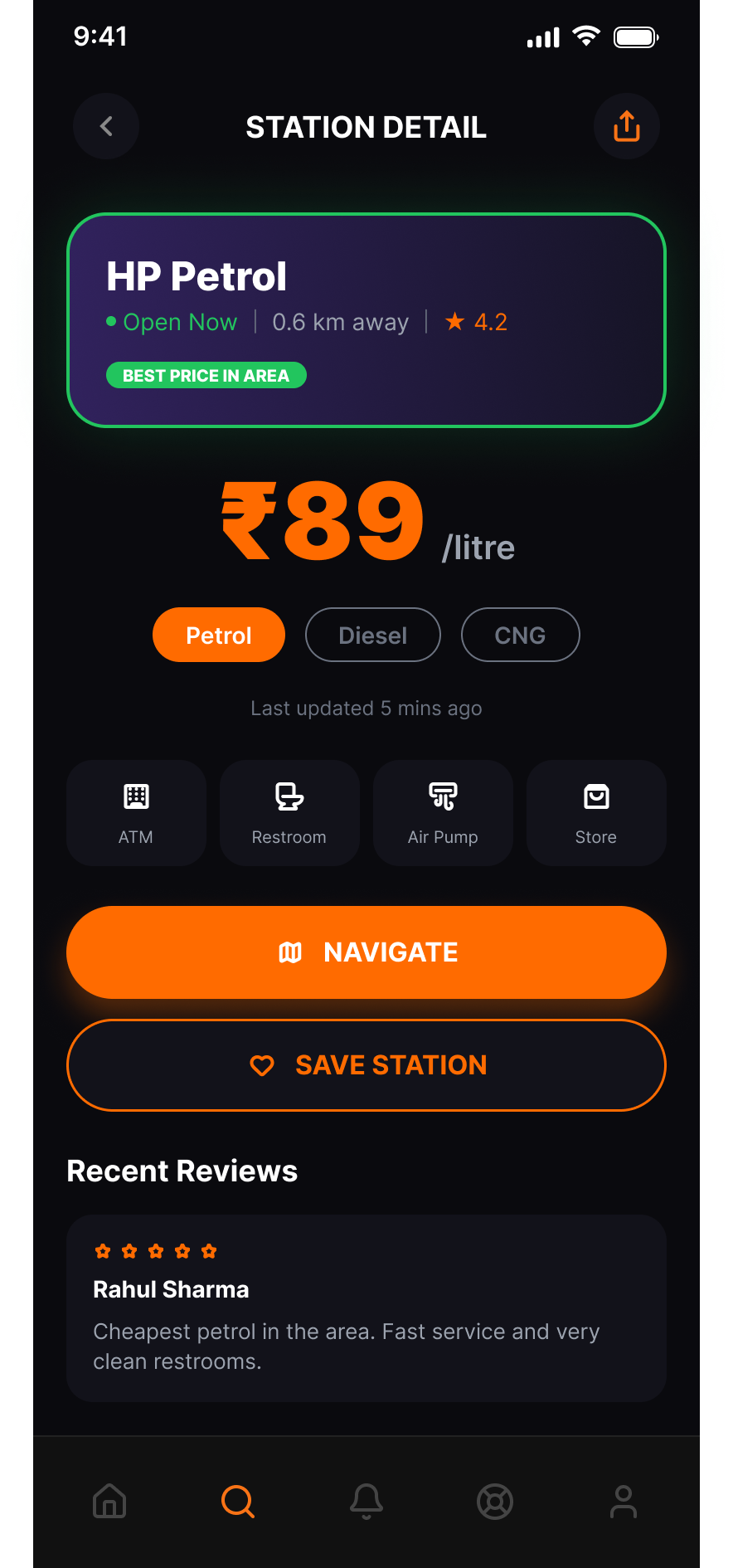
Fuel price is displayed in large, high-contrast text on every station card. This removes friction from the core task - comparing prices at a glance.

→

One-Tap Emergency Access

Roadside assistance is accessible from a persistent bottom bar, not buried in a menu. In an emergency, users should not have to think - they need to tap once and get help.

11

Future Scope

With more time and real user testing, I would prioritise these next-phase features.

Fleet Management Dashboard

B2B view for fleet managers - track all vehicles, fuel spend per driver, and flag overpriced refueling. Unlocks a high-value commercial market segment.

AI Price Prediction

"Prices in your area likely to rise tomorrow - refuel today to save ₹3/litre." Based on historical trend data. Low-effort, high-perceived-value feature.

OBD Low Fuel Integration

Connect to the car's fuel sensor via OBD dongle - app auto-alerts when fuel is low and shows the nearest cheapest station. True proactive UX.

Scheduled Fuel Delivery

Not just emergencies - users can schedule morning fuel delivery to home or office. Think Swiggy model applied to fuel logistics.

12

Reflection & Learnings

✦

Define success metrics before you design

I didn't set measurable goals at the start. Going forward, I'd define what success looks like - even rough proxies - before touching Figma.

✦

Talk to end users, not just stakeholders

I worked from secondary research and assumptions. Even 3 quick user interviews would have sharpened the problem definition significantly.

✦

Design for the B2B angle early

The fleet management use case emerged late. Identifying it earlier would have shaped core architecture decisions differently.

more projects

Let's talk

Hiring for something complex? Tell me what your team is trying to fix. I read every message.

Mohammed Jamal

Looking for a full-time product or enterprise design role, especially one with the messy, unglamorous problems in it.

let's make something clear together