A health-centric food delivery platform putting ingredient transparency, AI-powered personalization, and smart meal customization at the center of every order.
30
Survey respondents
56.7%
Rate healthy diet important
40%
Want AI recommendations
6
Usability tests conducted
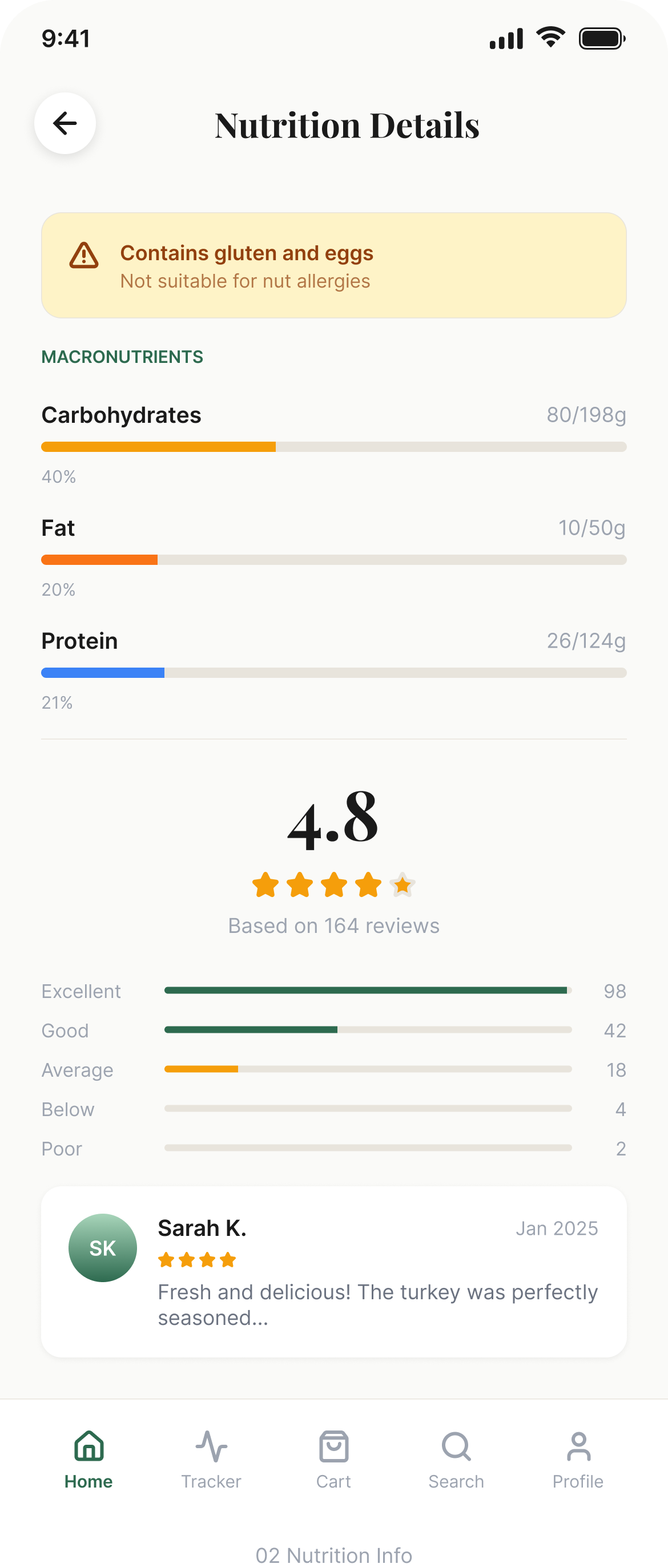
NutriDash is a health-centric food delivery app concept designed to solve a critical gap in existing platforms - the lack of ingredient transparency, personalized meal recommendations, and intuitive health-focused UX. I owned the entire design process across a 6-day sprint from research to tested prototypes.
Role
Solo UI/UX Designer (End to End)
Timeline
6-Day Design Sprint
Platform
Mobile App (iOS & Android)
Tools
Figma · Notion · Google Forms
Health-conscious individuals struggle to find convenient meal delivery options that align with their dietary goals due to a lack of ingredient transparency, personalized recommendations, and intuitive UX. This leads to frustration, uninformed choices, and real health risks.
Most food delivery apps don't provide detailed ingredient breakdowns, allergen alerts, or verified sourcing. Users rely on vague labels like "healthy" which mean nothing without context.
Apps don't adapt to individual dietary needs - vegan, keto, gluten-free, or allergy-specific. Users must manually filter through hundreds of options every single time.
Users spend excessive time researching meals outside the app or avoid food delivery altogether due to uncertainty about what they're actually eating.
Consumers with allergies may unknowingly consume harmful ingredients due to missing or unclear allergen information - a serious safety issue.
I conducted a Google Form survey with 30 respondents to validate the problem space with real data. Every number below came from actual responses - not assumptions.
Users want flexibility - the ability to tailor orders to their exact dietary needs and taste preferences above all else.
Users care deeply about knowing exactly what goes into their food - sourcing, allergens, and full ingredient lists matter more than generic labels.
Strong demand for AI-driven meal options tailored to individual health goals - but awareness of the technology needs to be built alongside the feature.
Health-focused filtering and affordability are equally important - healthy eating needs to be accessible, not just aspirational.
"A customizable meal system with ingredient transparency and AI-based recommendations would be highly effective. The 50% 'unsure' group on AI represents an education opportunity - not a rejection."
Research ConclusionTracks calories and macros daily. Orders food 4-5 times per week. Follows a keto diet and needs high-protein, low-carb options without manual searching.
Find meals that fit his diet instantly - without opening a nutrition calculator or checking ingredient lists manually.
No macro filters in current apps. Relies on guesswork. Often gives up and eats outside his diet because it's too hard to verify meals.
Orders food for the whole family. Her child has a severe nut allergy. Every order carries anxiety - even one mistake could be dangerous.
Order with complete confidence that her child's allergen needs are met - no fear, no second-guessing, no external research needed.
Allergen warnings are vague or missing entirely. Often calls restaurants directly to verify - a frustrating, time-consuming workaround.
Existing apps fail health-conscious users in critical ways. NutriDash fills the gaps that none of them address together.
| Feature | Swiggy | Zomato | HealthifyMe | NutriDash |
|---|---|---|---|---|
| Ingredient transparency | ~ |
~ |
||
| Real-time allergen alerts | ||||
| AI meal recommendations | ||||
| Customizable meals | ~ |
~ |
||
| Macro & calorie tracking | ||||
| Smart meal swapping | ||||
| Subscription meal plans | ||||
| Gamification for health | ~ |
I followed a structured sprint methodology - moving from problem understanding to tested prototypes in 6 focused days.
Defined and framed the problem statement. Identified who is affected, what the core issue is, why it matters, and what needs to change.
Conducted a 30-person survey. Extracted key metrics across feature preferences, AI adoption rates, and dietary priorities. Validated every assumption with real data.
Mapped the Who/What/How/When framework. Documented the before and after impact. Sharpened the problem to a precise, actionable design brief.
Ran both convergent and divergent brainstorming. Identified 3 high-impact convergent solutions and 2 bold divergent concepts including a virtual nutritionist chatbot.
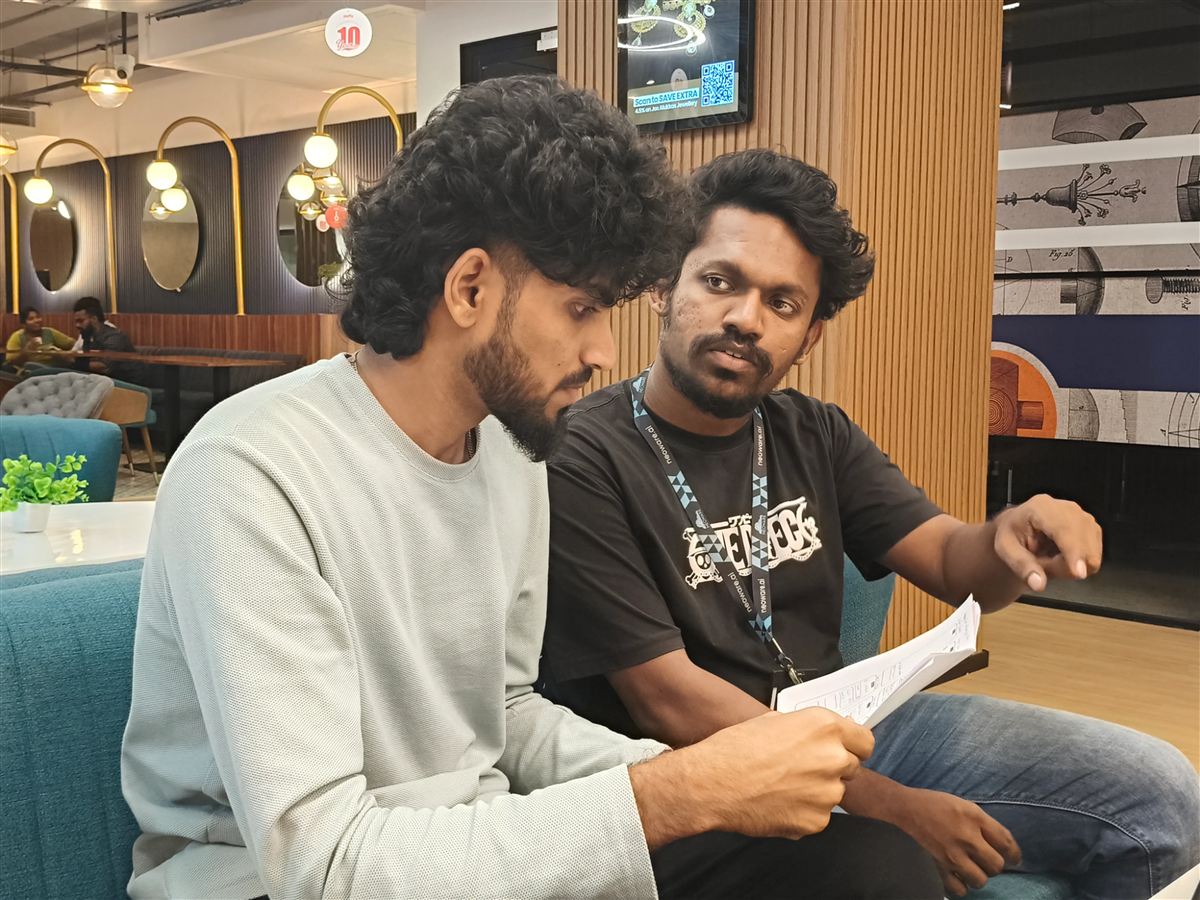
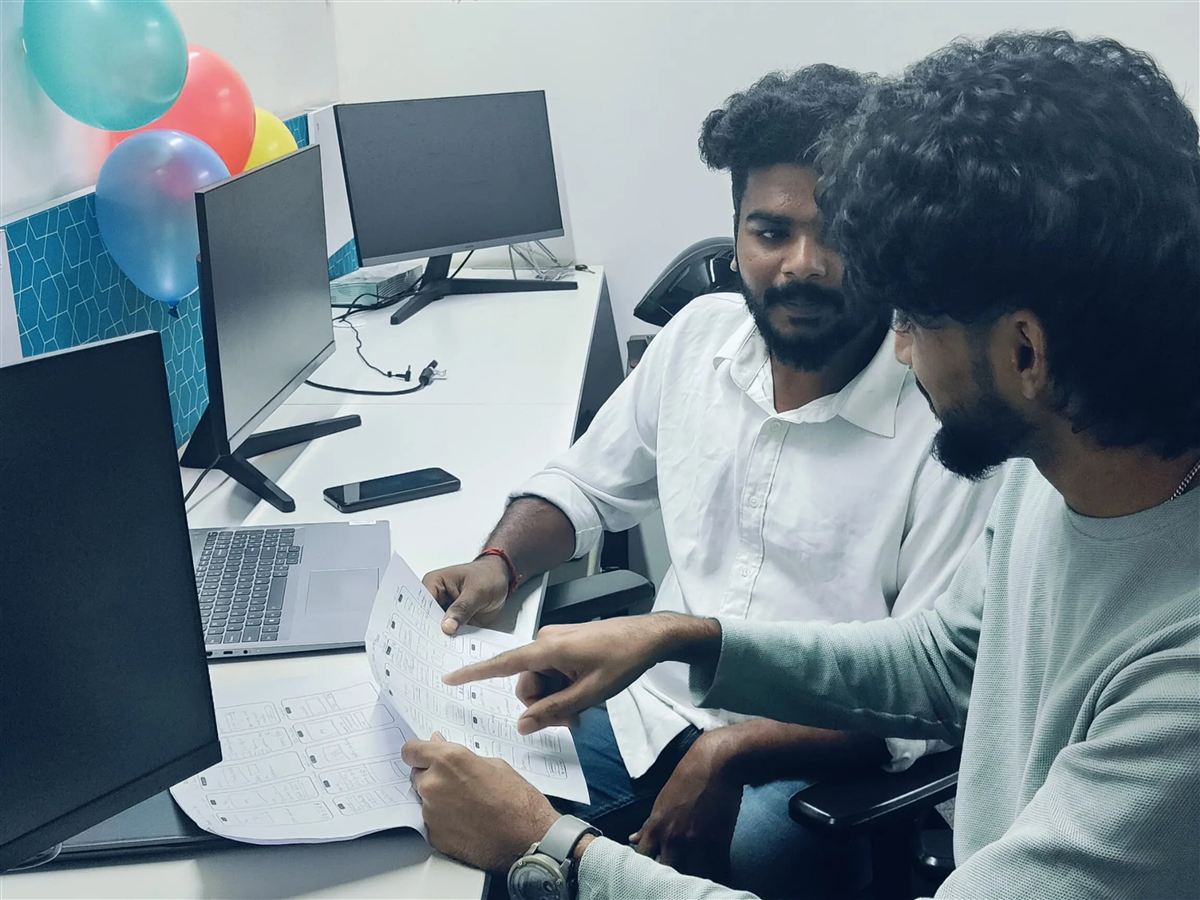
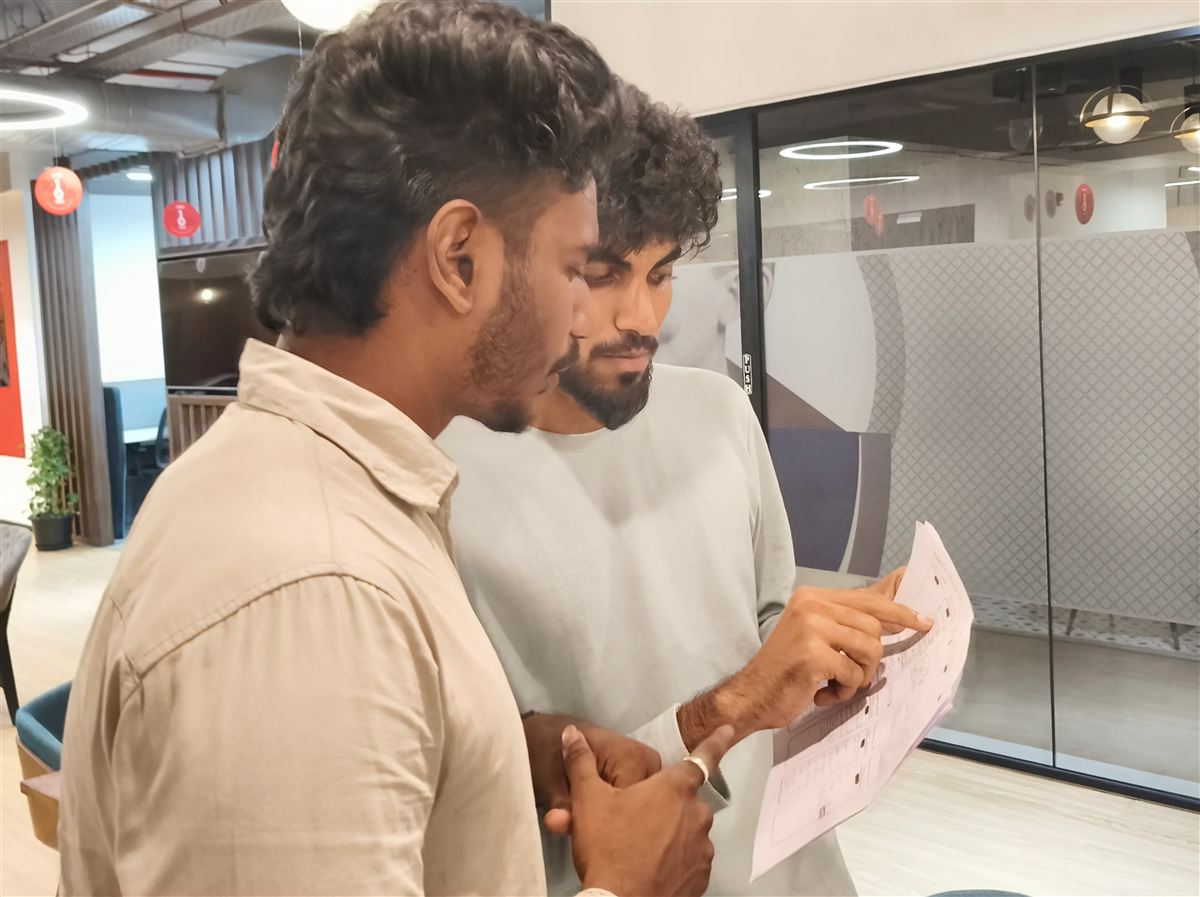
Hand-drawn sketches to validate flow before screens. Built high-fidelity mockups in Figma for 4 core user flows - Order, Nutrition, Swap, and Dashboard.
In-person usability testing with 6 real users. Collected structured feedback and documented 4 key iterations grounded in specific user pain points.
I used both convergent thinking (best practical solutions) and divergent thinking (bold unconventional ideas) before settling on the final feature set.
From the brainstorming session I converged on 4 high-impact features that directly address the research findings and user pain points.
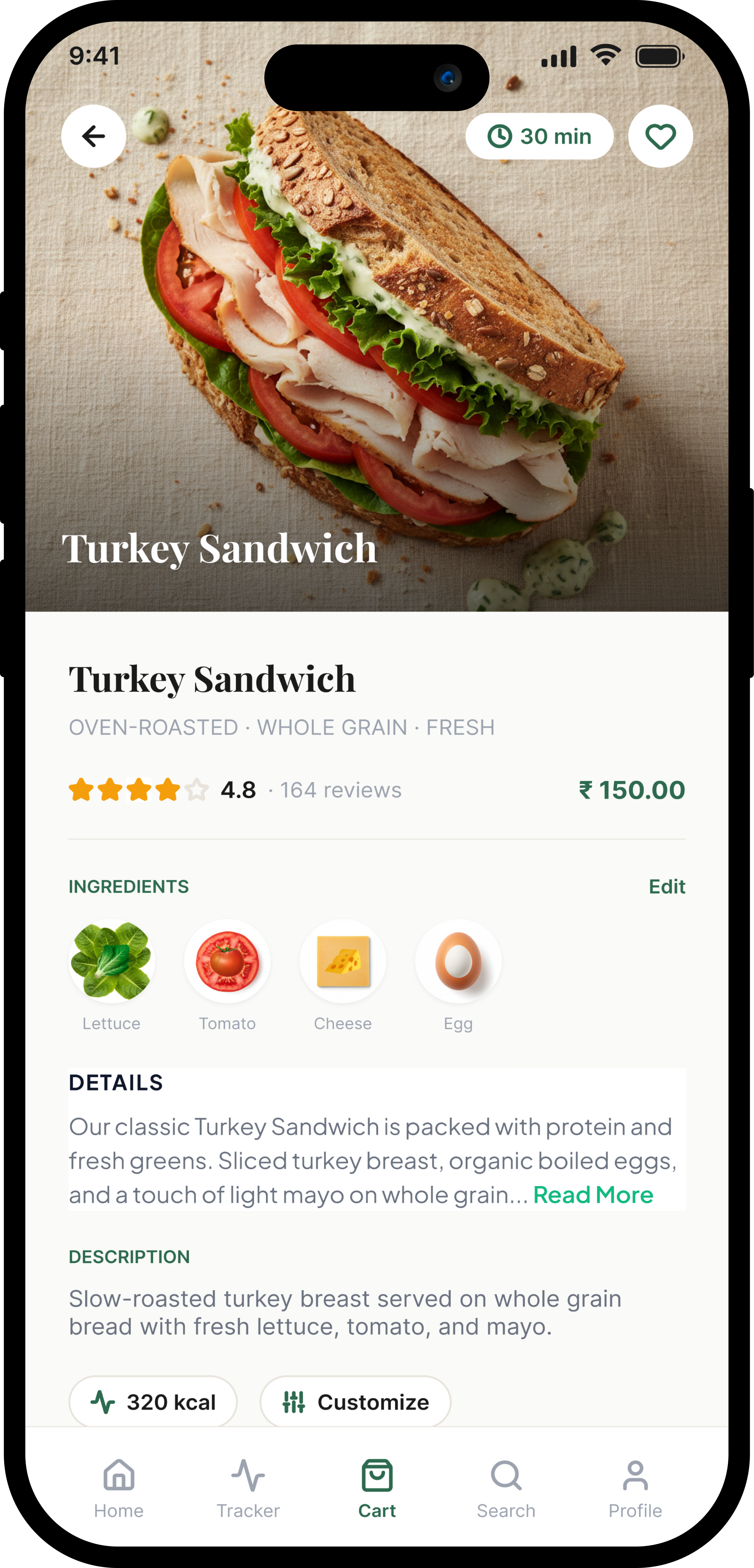
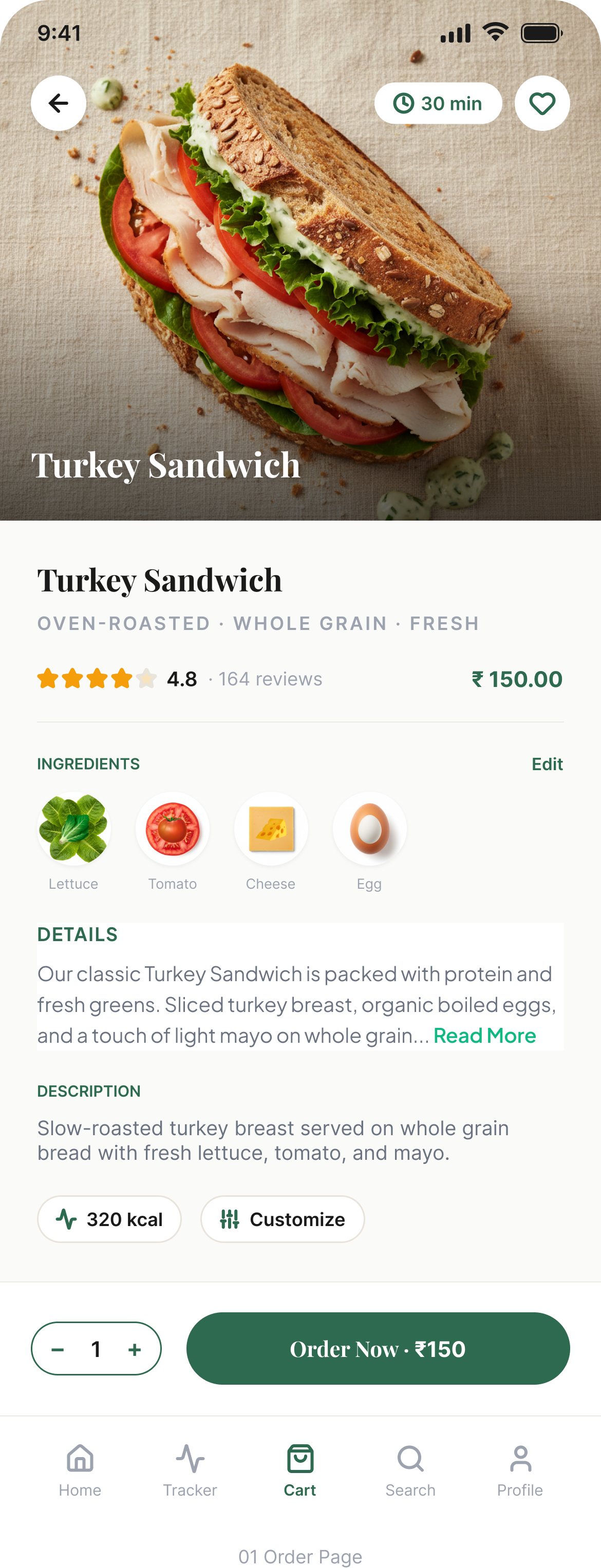
A dedicated section on the meal details page showing full ingredient breakdown, sourcing details, macros, calories, real-time allergen alerts, and automatic dietary tags. Boosts user trust and allows informed choices in seconds.
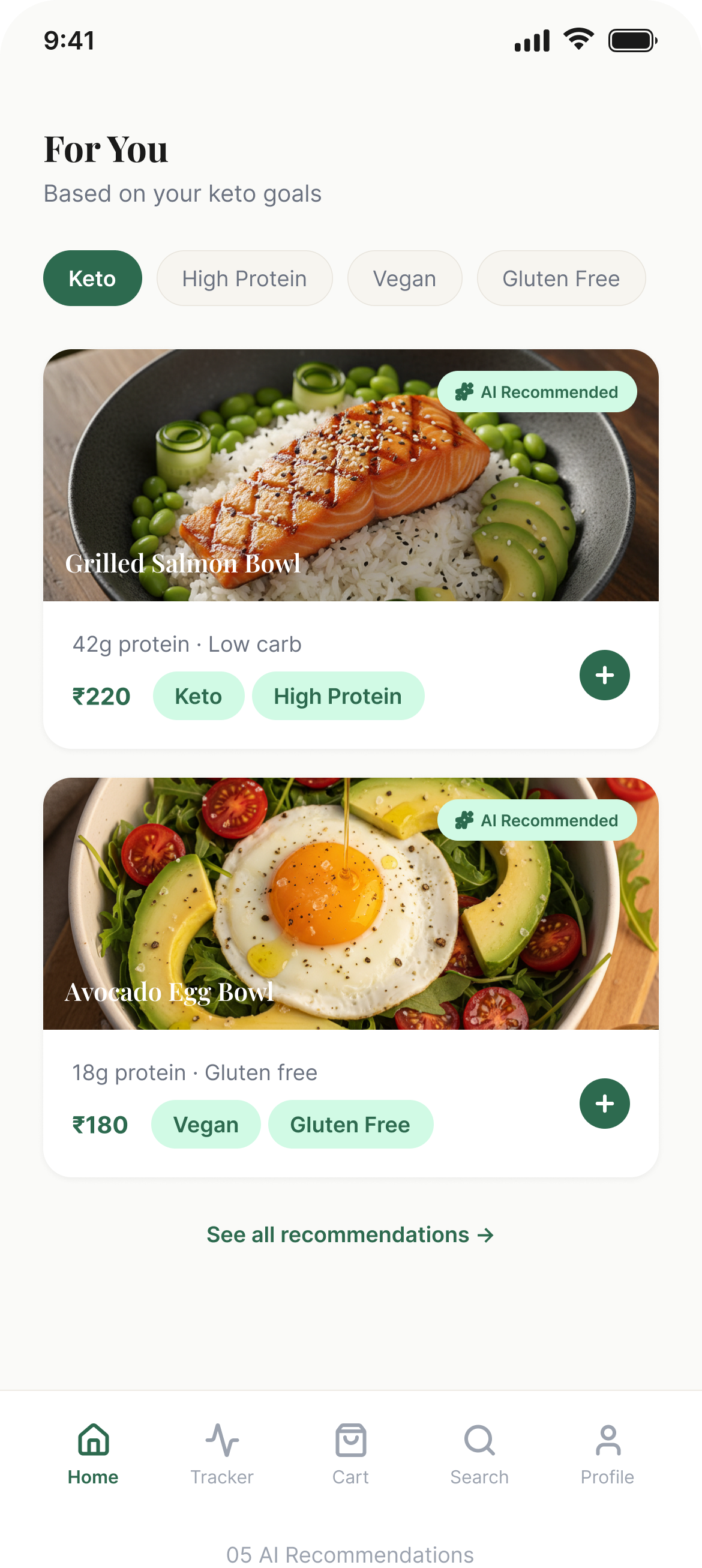
Smart meal suggestions based on saved dietary preferences, past orders, and health goals. Syncs with fitness apps for real-time calorie tracking. AI flags meals with hidden allergens automatically.
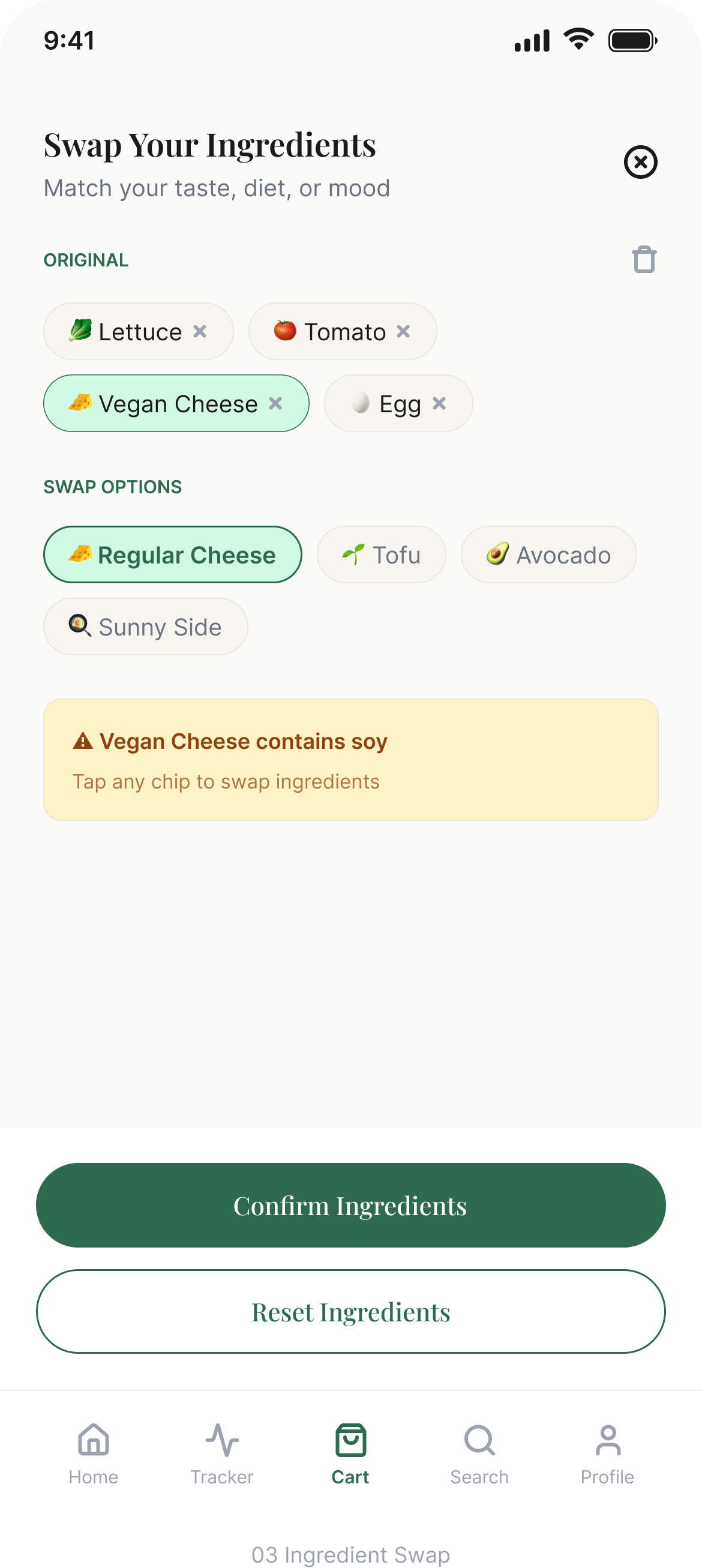
Auto-swaps unhealthy ingredients with healthier alternatives without changing the meal type. User inputs health goals and the app dynamically suggests swaps - plant-based, gluten-free, grilled instead of fried.
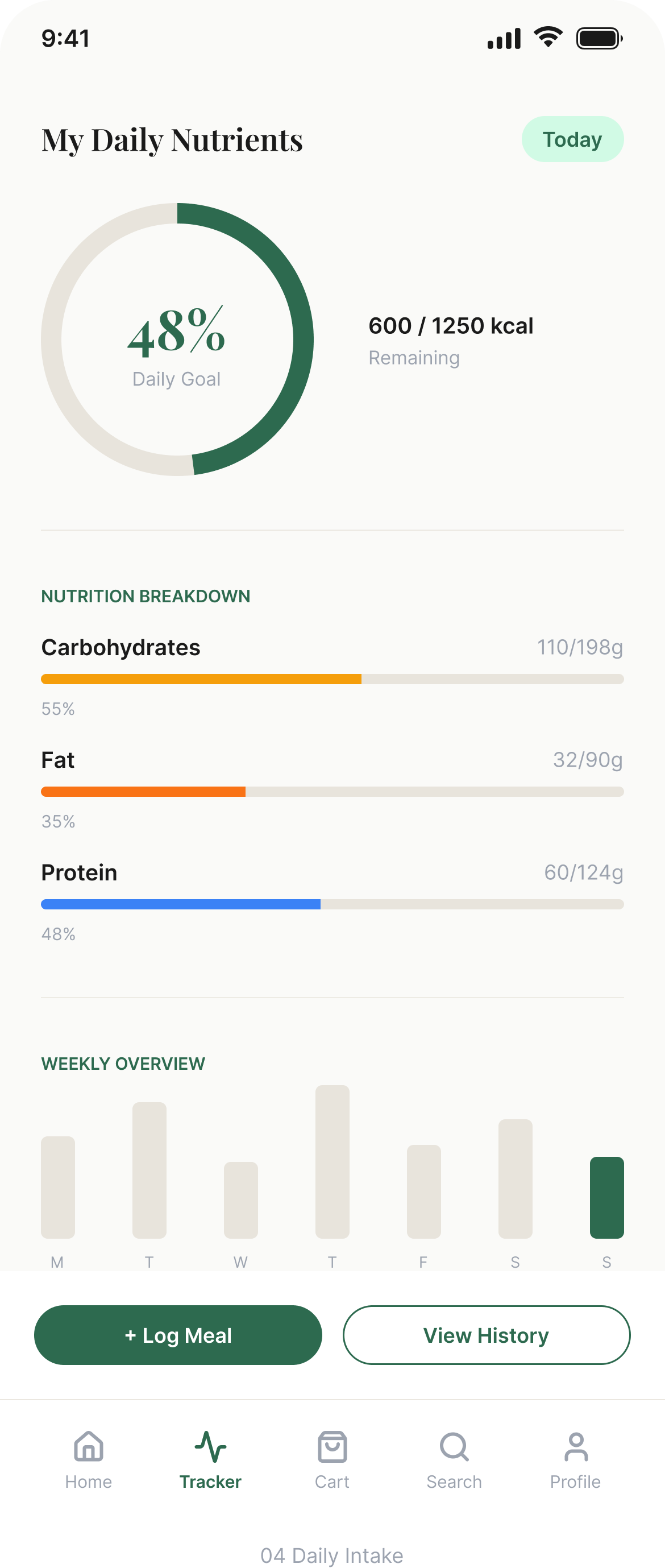
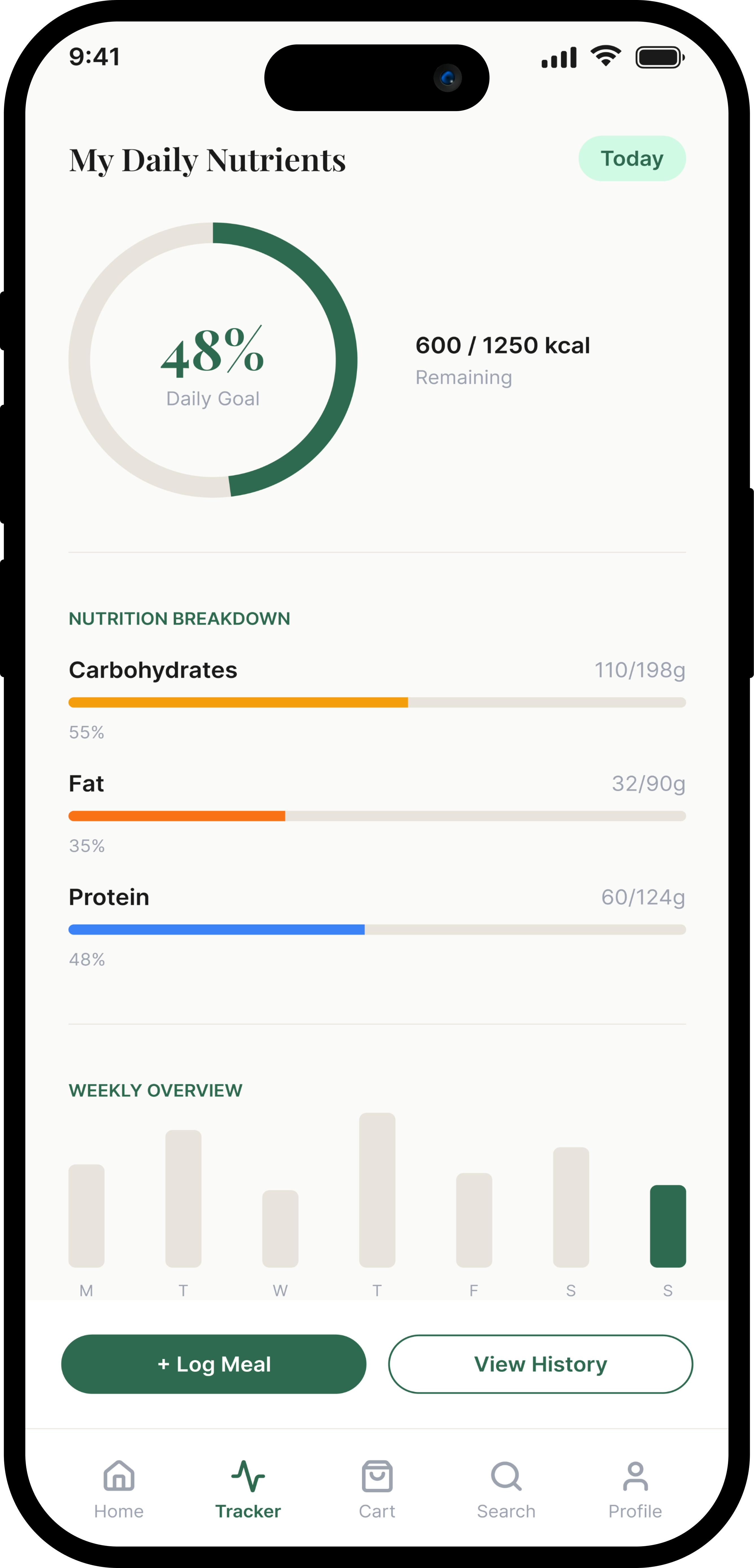
Personalized dashboard tracking previous orders, health stats, and meal insights. Weekly health reports, calorie intake summaries, and smart re-order suggestions based on past healthy choices.
High-fidelity screens designed in Figma covering the 4 core user flows. Each screen was designed after hand-drawn wireframes validated the layout and flow.
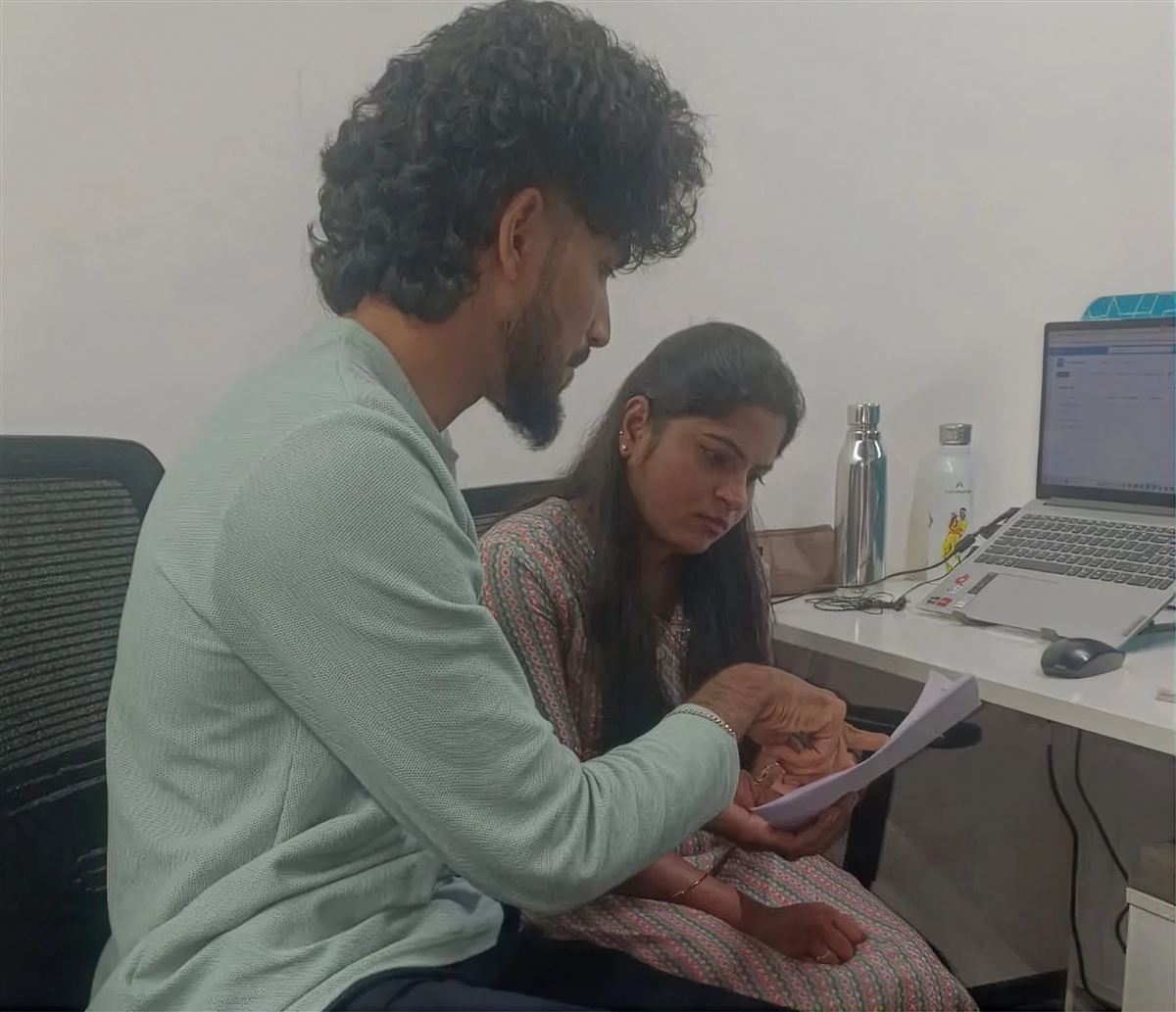
Real in-person usability testing with 6 actual users. Not assumptions. Not surveys alone. Real people, real reactions, real problems uncovered.
Restaurant owners noted that healthy meals take longer to prepare, risking delays during peak hours. Users needed realistic visibility into wait times before ordering.
Several users found healthy meal options too expensive to order regularly. Healthy eating felt aspirational but not accessible. Affordability was a real blocker.
Users wanted to align meal delivery with their daily routines - post-gym sessions, lunch breaks, or pre-planned weekly schedules. Planning ahead was missing entirely.
Strong interest in syncing with Apple Watch, Google Fit, and Fitbit to automatically track calorie intake. Users wanted food choices to flow into their existing health ecosystem.
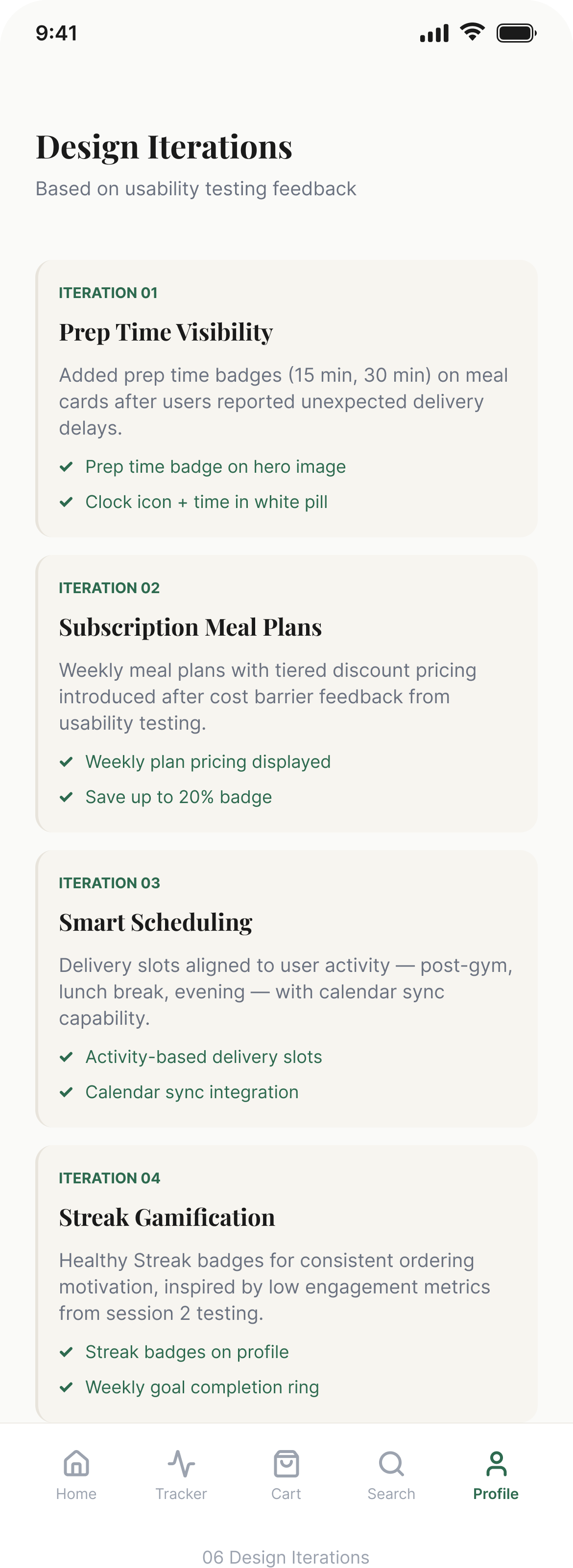
Based on usability testing I made 4 concrete design improvements - each directly addressing a specific user pain point discovered during testing.
Introduced a Prep Time Badge on each meal card so users know what to expect before ordering. Added a "Quick and Healthy" filter for meals under 20 minutes. Restaurants can set prep-time limits during busy hours.
Partnered with restaurants for budget-friendly healthy combos. Added weekly subscription plans with discounted pricing. Designed a Meal Credit reward system - earn points for consistent ordering.
Built smart scheduling - delivery slot selection based on time of day, activity type, or calendar sync. Save routine schedules for faster future orders. Push reminders for regular meal times.
Users earn badges for consistency (e.g., "Healthy Streak: 7 Days"). Daily wellness tips and healthy eating facts. Health progress tracking integrated with Apple Health and Fitbit.
With a larger user base and more development time, these next-phase features would significantly deepen the product value.
AI chatbot answering real-time questions about any meal. Uses user health profile and app ingredient data to give personalized dietary advice.
Sync with Apple Watch, Google Fit, and Fitbit to auto-track calorie intake. App sends smart meal recommendations based on real-time health data.
A verified health rating system for restaurants based on ingredient quality, preparation methods, and nutritional accuracy. Builds platform-wide trust.
A B2B marketplace connecting corporate wellness programs with meal prep providers. Employees get subsidized healthy meal delivery through their employer.
Having actual survey data from 30 respondents changed every design decision. Numbers like 56.7% and 40% aren't estimates - they're real user voices. Every designer should start with research, not assumptions.
I didn't anticipate the prep time issue or the cost barrier until real users raised them. Testing with just 6 people uncovered 4 significant problems I had completely overlooked.
Taking feedback and turning it into specific design changes - prep time badge, subscription plans, smart scheduling, gamification - is what separates a finished product from a concept.
I'd define success metrics upfront - task completion rate on the ingredient panel, allergen alert click-through rate, repeat order frequency. Measuring impact from day one makes the design stronger.
Half of respondents were unsure about AI recommendations - not against it. This isn't rejection, it's an education gap. The app needs to show value through onboarding and subtle UI nudges.
Hiring for something complex? Tell me what your team is trying to fix. I read every message.
Looking for a full-time product or enterprise design role, especially one with the messy, unglamorous problems in it.